

Canadian Militias History Key Events Roles and Remarkable Figures
Canada’s militia story starts long before Confederation, in muddy parish roads, fortified river towns, and frontier clearings where military service often sat beside farming, trade, and family life. For centuries, militias helped defend settlements, support imperial armies, police crises, and shape the Canadian Army that followed.
The story isn’t tidy. Militias could be brave, undertrained, politically tangled, and deeply local all at once. They reflected the societies that raised them: New France, British North America, the young Dominion, and modern Canada. If you trace the Canadian militia, history gives you one of the clearest routes into how Canada built both military institutions and civic identity.
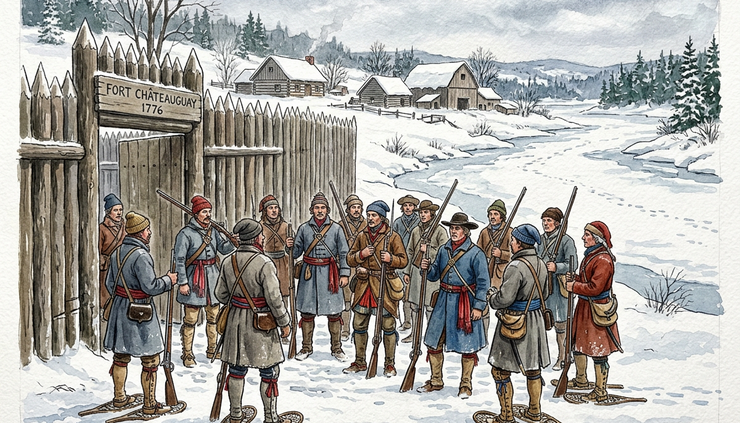
The roots of militia service in New France
The militia system in Canada grew from necessity. New France had a small population, long supply lines, and vast distances to defend. Regular troops mattered, especially the Compagnies franches de la marine, but local defence depended heavily on the milice canadienne.
By the late 17th century, militia service was organized through parishes. Men of military age could be called out under local captains, usually respected community figures. These captains were more than tactical leaders. They helped pass orders, organize labour, support logistics, and connect colonial authorities with rural communities.
Militia fighters in New France developed skills suited to North American war:
Moving through forests and waterways
Fighting in dispersed formations
Conducting raids and ambushes
Supporting fortifications and supply routes
Cooperating with Indigenous allies, though on unequal colonial terms
This wasn’t European line warfare transplanted neatly into the St. Lawrence Valley. It was local adaptation. French colonial commanders came to rely on militia forces for scouting, raiding, and the kind of mobile warfare that regular troops often struggled to master.
One key figure here is Louis de Buade, Comte de Frontenac, governor of New France during major conflicts with the Haudenosaunee and English colonies. Frontenac didn’t create the militia system, but he used colonial forces aggressively and understood their value in a theatre where mobility counted for a lot.
Militias in the imperial wars
The 18th century put Canadian militias under intense pressure. During the War of the Austrian Succession and the Seven Years’ War, local militia forces helped defend New France against British and colonial American attacks.
Militiamen were present in campaigns across the St. Lawrence and Great Lakes regions. They carried supplies, built works, guarded posts, scouted, and fought. Their performance varied, as all militia performance does, but commanders couldn’t ignore their local knowledge.
The British conquest of 1759 to 1760 changed the political order but didn’t erase the militia habit. After the fall of Quebec and Montreal, British administrators recognized that local defence still required local manpower. French Canadian militia structures were adapted under British rule, though loyalty became a central concern.
During the American Revolutionary War, this mattered. British authorities called on Canadian militia units to defend the province against invasion. The American campaign against Quebec in 1775 to 1776 tested the loyalty of French Canadians, British regulars, Indigenous allies, and local volunteers. The defence of Quebec under Guy Carleton became a defining moment. Militia participation helped show that the colony could not simply be swept into rebellion.
That said, militia service was not always enthusiastic. People balanced obligations, fears, loyalties, and practical survival. That’s part of what makes the subject so interesting. Militias reveal not just military plans, but social reality.
The War of 1812 made the militia a national legend
No period looms larger in Canadian militia memory than the War of 1812. The conflict turned militia service into part of Canada’s origin story, especially in Upper Canada.
British regulars carried much of the fighting, and Indigenous nations played decisive roles, especially in the western theatre. Still, Canadian militia forces became central to later memory because they represented local defence against American invasion.
Several events stand out.
Detroit and the value of combined forces
In 1812, Major-General Isaac Brock and Tecumseh forced the surrender of Detroit. The victory relied on nerve, deception, Indigenous military power, British regulars, and militia support. Brock became a heroic figure in Canadian memory, though his success depended heavily on allies and local forces.
Militia units helped give the impression of strength. In frontier warfare, perception mattered. Detroit showed how a small force, well handled, could produce effects beyond its size.
Queenston Heights and militia memory
At Queenston Heights on 13 October 1812, Brock was killed while trying to retake the heights from American forces. The battle became one of the most famous moments in Canadian military history.
Militia forces fought alongside regulars and Indigenous warriors. John Norton, a Mohawk leader with Scottish and Cherokee ancestry, played a major role in rallying Indigenous fighters during the battle. His contribution reminds us that the defence of British North America was never a simple British-and-Canadian story. It was also shaped by Indigenous strategy, alliance, and resistance.
Châteauguay and French Canadian military leadership
The Battle of Châteauguay on 26 October 1813 gave French Canadian militia service one of its best-known victories. Charles-Michel de Salaberry, commanding the Canadian Voltigeurs and militia forces, helped block an American advance toward Montreal.
The battle has sometimes been wrapped in myth, but the core point stands. De Salaberry used terrain, discipline, and deception well. His force was smaller than the invading column, yet it helped stop the advance. Châteauguay strengthened French Canadian pride in militia service and gave British authorities a clear example of local military value.
The War of 1812 didn’t create the militia tradition in Canada, but it gave that tradition its most durable public mythology.
From rebellion to Confederation
After 1815, the militia remained part of colonial defence, though readiness often slipped in peacetime. Muster days could become social occasions as much as military ones. Equipment and training were uneven. Political leaders still valued the institution, partly because it offered a local defence structure without the cost of a large standing army.
The Rebellions of 1837 and 1838 changed the mood. Colonial governments used loyalist militia forces to suppress uprisings in Upper and Lower Canada. Militias took on an internal security role, which left a more complicated legacy than battlefield defence. For some communities, they symbolized loyalty and order. For others, they represented repression.
By the mid-19th century, Britain wanted colonies to take more responsibility for defence. The Crimean War, fears of American expansion, and the U.S. Civil War all sharpened that pressure. The Trent Affair of 1861 raised fears of war between Britain and the United States, and Canadian defence planning took on new urgency.
The Volunteer Militia Act of 1855 marked a major step. It encouraged volunteer military companies, including infantry, cavalry, artillery, and rifle units. These forces became an important bridge between older compulsory militia traditions and the later Canadian Army.
Then came the Fenian Raids.
Irish American Fenian groups crossed into British North America in the 1860s hoping to pressure Britain over Ireland. Canadian militia units mobilized to meet them, especially during the 1866 raids. The fighting exposed weaknesses in training, command, and supply, but it also strengthened public support for Confederation and defence reform.
The units, names, and local identities of this period still echo in Canadian military traditions today.

The militia after Confederation
Confederation in 1867 gave the new Dominion responsibility for defence. Canada inherited a militia system rather than a large regular army. That choice fit political reality. Canadians were wary of permanent military costs, and Britain still influenced imperial defence.
The early post-Confederation militia was divided between a small permanent force and a larger non-permanent militia. The permanent element trained personnel, guarded key sites, and provided professional continuity. The non-permanent militia remained citizen-soldier based.
The Red River Expedition of 1870, led by Garnet Wolseley, showed the young Dominion’s need for organized military movement across difficult geography. It also exposed the political and cultural tensions of expansion into the Northwest.
The North-West Resistance of 1885 placed militia forces in the field again. Under Major-General Frederick Middleton, Canadian troops moved west by rail and fought at places such as Fish Creek and Batoche. The campaign showed how railway infrastructure had changed Canadian military mobility. It also left a painful legacy in Métis and First Nations history. Militia service, state power, and national expansion came together in ways that still need careful handling.
By the end of the 19th century, Canada’s militia was becoming more professional, but slowly. Training camps, rifle associations, artillery schools, and staff reforms helped. So did imperial warfare. During the South African War, Canadian contingents included many men with militia backgrounds. Overseas service gave Canadian soldiers experience beyond local defence.
The militia and the making of the Canadian Army
The First World War transformed militia culture. Canada did not send its existing militia units overseas as intact formations in the way many expected. Instead, the Canadian Expeditionary Force was created, drawing heavily on militia officers, soldiers, armouries, and recruiting networks.
This caused tension. Militia regiments had long histories and local pride, but overseas battalions often had new numbers and structures. Still, the militia provided the human framework. Many early CEF leaders came from militia service.
Two figures stand out.
Sir Sam Hughes, Minister of Militia and Defence, drove early mobilization with enormous energy. He championed Canadian-made arrangements and militia traditions, though his administration became controversial because of favouritism, procurement problems, and difficult relations with professional soldiers.
Sir Arthur Currie began as a militia officer in British Columbia before rising to command the Canadian Corps. Currie’s career shows how militia roots did not prevent professional excellence. At Vimy Ridge, Hill 70, Passchendaele, and during the Hundred Days, Canadian forces earned a reputation for careful preparation and hard fighting. Currie’s growth from citizen-soldier to corps commander remains one of the strongest links between militia culture and Canadian military development.
After the war, Canada reorganized its forces and worked to preserve battle honours and identities. The militia became a home for memory as well as readiness. Armouries across the country served as drill halls, recruiting centres, and community landmarks.
The Second World War and the reserve tradition
Before the Second World War, Canada still relied on a small permanent force and a much larger militia. When war came in 1939, militia units again became key recruiting and mobilization structures.
Many Canadian infantry, armoured, artillery, engineer, and service units drew on part-time soldiers and local regimental systems. The militia did not fight the war alone, of course. Canada built large active forces for overseas service. Yet the reserve tradition helped provide identity, leadership, and continuity.
The war also widened the militia’s social reach. Military service brought Canadians from different regions and backgrounds into common training systems. It strengthened federal military administration and helped normalize the idea that Canada needed forces that could serve far beyond local defence.
After 1945, the militia continued as the Army Reserve. The Cold War changed its tasks. Reserve soldiers trained for civil defence, reinforcement of regular forces, domestic support, and later peacekeeping-related roles. The title and structure changed over time, but the citizen-soldier idea survived.
How militias shaped Canadian society
Militias did more than fight. They shaped Canadian civic life in visible and subtle ways.
Armouries became local institutions. Regimental bands played at public events. Cadet and rifle programs tied military habits to community life. Service could bring status, especially for officers, and militia networks often overlapped with politics, business, and local leadership.
There were also exclusions. Militia institutions reflected the inequalities of their periods. Indigenous peoples, Black Canadians, French Canadians, women, and other communities faced different barriers depending on time and place. Some served with distinction anyway, often without equal recognition.
Militias also helped define Canada’s relationship with Britain and, later, its own independence. For a long time, militia policy balanced local self-defence with imperial obligation. The world wars pushed Canada toward a more national military identity. The militia system gave Canada a foundation, but war forced that foundation to change.
The social impact cuts both ways. Militias could defend communities, but they could also enforce state authority during rebellions, strikes, and resistance movements. That mixed record is part of the honest history.
Remarkable figures worth remembering
A few names help anchor the larger story:
Frontenac
Used colonial militia forces as part of New France’s mobile frontier defence.
Isaac Brock
Inspired Upper Canadian defence in 1812 and became a lasting symbol of wartime leadership.
Tecumseh
Led Indigenous resistance and alliance efforts that shaped the western theatre of the War of 1812.
John Norton
Helped lead Indigenous fighters at Queenston Heights and left valuable writings on his experiences.
Charles-Michel de Salaberry
Commanded at Châteauguay and became a key figure in French Canadian military memory.
Garnet Wolseley
Led the 1870 Red River Expedition and influenced military professionalism in the empire.
Frederick Middleton
Commanded during the North-West Resistance, a campaign central to debates over state power and expansion.
Sam Hughes
Mobilized early First World War forces with energy and controversy.
Arthur Currie
Rose from militia officer to commander of the Canadian Corps, proving how far the citizen-soldier path could lead.
FAQ
Were Canadian militias the same as the regular army?
No. Militias were usually part-time or locally raised forces, while regular soldiers served full time. Over time, Canada developed a small permanent force alongside a larger militia or reserve structure.
Did militias really win the War of 1812?
Not by themselves. British regulars, Indigenous allies, militia forces, and naval power all mattered. Later memory often gave militias a bigger role than the evidence supports, but their contribution was still real.
Why were militia units so local?
Local organization made recruiting, training, and command easier. It also tied units to community identity, which helped morale and public support.
How did the militia influence the modern Canadian Army?
It provided officers, soldiers, regimental traditions, armouries, and mobilization networks. The modern Army Reserve grew from that long militia tradition.
Were militias always popular?
No. Some people valued them as community defence. Others saw them as burdensome, political, or tied to state coercion. Their reputation changed by region and period.
The lasting meaning of Canadian militias
The history of Canadian militias is really a history of adaptation. Local fighters in New France learned to move through forests and rivers. Volunteer companies answered invasion scares before Confederation. Citizen-soldiers served in rebellions, raids, imperial wars, and global conflicts. Over time, their institutions helped build the Canadian Army’s reserve backbone.
The best way to read this history is without romantic fog. Militias could be courageous and chaotic, useful and uneven, civic-minded and coercive. That’s what makes them worth studying. They show Canada’s military development from the ground up, through communities, commanders, crises, and the people who showed up when called.


Comments